
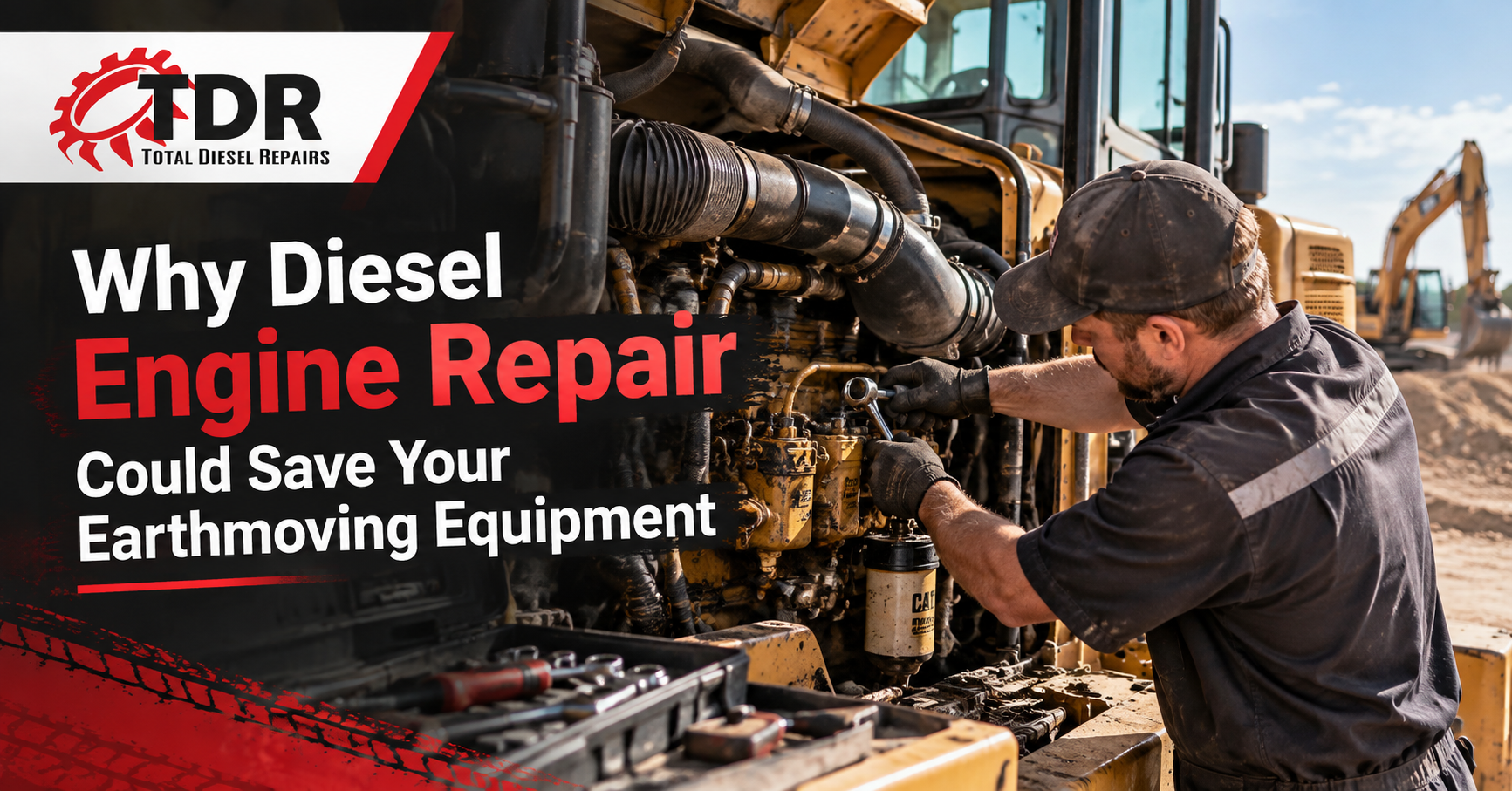
Anyone who has spent time near heavy machinery knows that diesel engines rarely fail without warning. There are usually signs long before a breakdown occurs, which is exactly why diesel engine repair deserves proper attention rather than being treated as an afterthought. Excavators, bulldozers, and loaders are pushed hard every single day, often in dusty, hot, and unforgiving conditions. Over time, this takes a toll. The good news is that with the right maintenance habits, most major issues can be avoided altogether.
Why Diesel Engine Maintenance Matters More Than People Think
Diesel engine maintenance is often viewed as a box-ticking exercise, something done simply to avoid trouble. In reality, it is far more valuable than that. Well-maintained engines run more efficiently, use less fuel, and are far less likely to let operators down halfway through a job.
This matters even more for earthmoving equipment, which is frequently used in remote or hard-to-access sites. A breakdown out there is not just inconvenient. It can disrupt the entire project’s workings while parts and technicians are being arranged. Catching small problems early, before they turn into issues requiring a full diesel engine repair, is one of the smartest habits any operator can develop.
Daily Checks That Actually Make a Difference
It does not take a mechanic to spot early warning signs. Operators who take a few minutes each day to check their machine often catch problems long before they become serious.
Worth checking daily:
- Oil levels, topping up as needed.
- Coolant levels, particularly in warmer months.
- Air filters, which clog quickly in dusty environments.
- Hoses and seals for any sign of leaks.
- Unusual noises when starting the engine.
- None of these checks take long, yet together they can add years to the working life of a machine.
Scheduled Servicing is Not Optional
Daily checks are useful, but they only go so far. Proper servicing, carried out by someone who understands earthmoving machinery, picks up on issues that are simply not visible from the outside.
Stick to this general servicing guide for the best outcomes:
| Service Interval | Key Tasks |
|---|---|
| Every 250 hours | Oil and filter change, general inspection |
| Every 500 hours | Fuel filter replacement, cooling system check |
| Every 1000 hours | Injector inspection, turbocharger check |
| Every 2000 hours | Full diagnostic and component review |
Sticking to a schedule like this means problems are found while they are still small, rather than after they have already caused damage elsewhere in the engine.
The Problems That Keep Coming Up
Even well-cared-for machines run into trouble occasionally. Knowing what to look out for can mean the difference between a quick fix and a lengthy diesel engine repair job.
Common culprits include:
- Contaminated fuel damaging injectors.
- Overheating from blocked cooling systems.
- Heavy exhaust smoke pointing to combustion issues.
- Power loss caused by clogged air filters.
- Oil contamination from worn seals.
Warning Signs That Should Never Be Ignored
Recognising early warning signs can prevent a simple fix from turning into a full diesel engine repair. Earthmoving equipment often signals trouble well before a breakdown occurs. Operators who notice these signs early can save considerable time and cost.
| Warning Sign | Possible Cause |
|---|---|
| Difficulty starting | Weak battery or fuel issues |
| Excessive vibration | Worn engine mounts or injectors |
| Dark exhaust smoke | Poor combustion or blocked filters |
| Sudden power loss | Fuel delivery problems |
| Rising engine temperature | Cooling system fault |
- It is worth contacting a professional when:
- The engine struggles to start more than once.
- Warning lights remain on after restarting.
- Performance drops noticeably during operation.
- Unusual smells accompany engine noise.
Acting on these signs early keeps earthmoving equipment reliable and reduces the risk of costly diesel engine repair later on.
Small Habits That Extend Engine Life
Beyond servicing, there are a handful of habits that genuinely make a difference over the long run.
Consider the following:
- Using quality fuel and proper filtration.
- Letting engines warm up before heavy use.
- Cutting back on unnecessary idling.
- Storing machinery correctly when not in use.
- Keeping records of servicing and repairs for each machine.
None of this is complicated, but consistency is what makes it effective.
Why Professional Support Still Matters
Even the most attentive operator will miss things that an experienced technician would catch immediately. This is particularly true for businesses running several machines across different sites, where it becomes difficult to stay on top of everything alone.
A proper assessment also means that any diesel engine repair work is done correctly the first time, using methods and parts suited to that specific engine. This protects both performance and long-term reliability and avoids the frustration of recurring issues.
Keep Your Fleet Running the Way It Should with Total Diesel Repairs
Looking after diesel engines in earthmoving equipment comes down to a mix of daily attention, consistent servicing, and knowing when to call in an expert. Get these right, and downtime becomes far less of a headache.
Total Diesel Repairs works with earthmoving businesses to keep engines running as they should, offering thorough diesel engine repairs and honest, experienced advice when it is needed most. Contact our team now for machinery repair or routine maintenance services.


