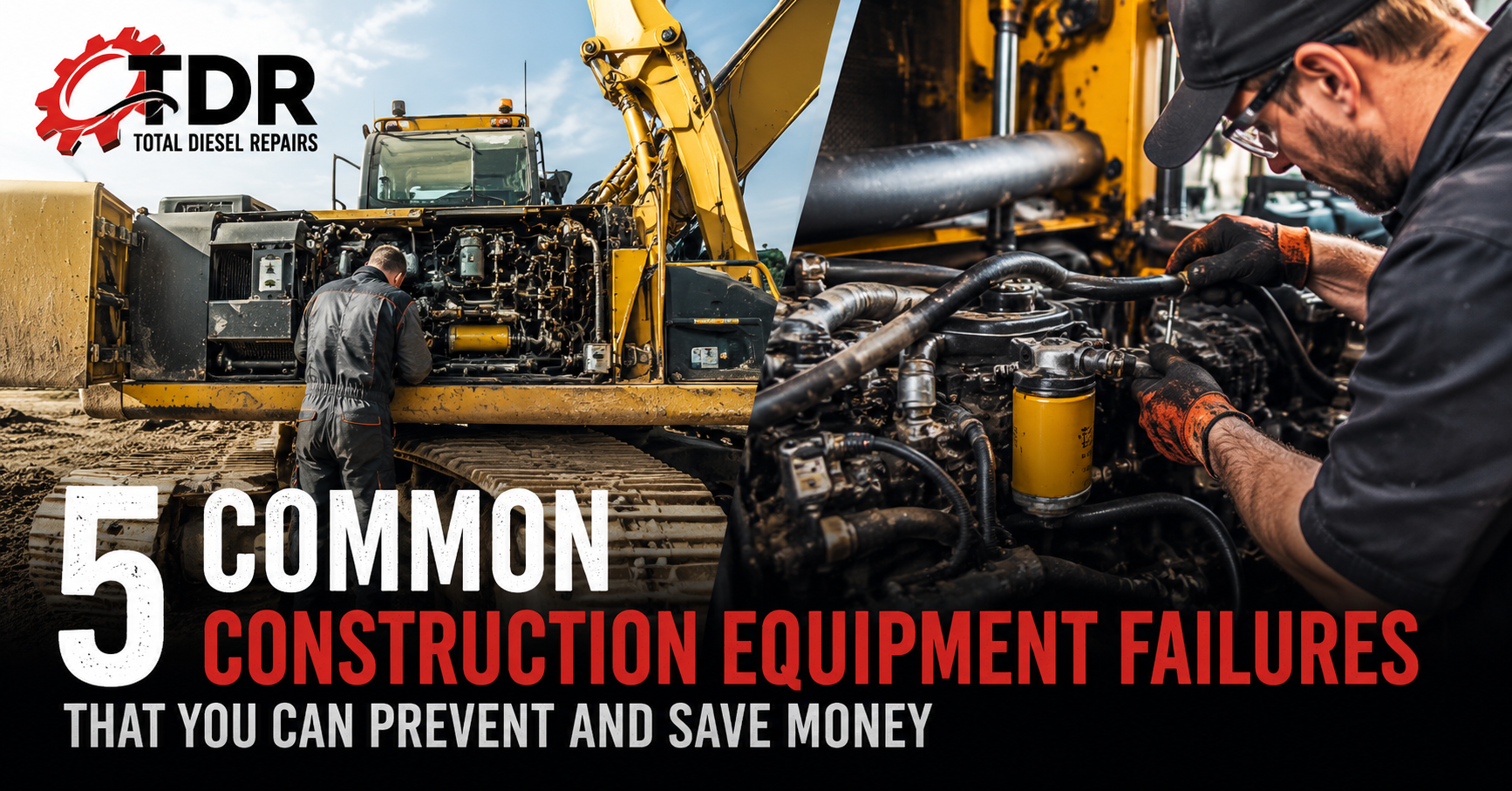
When construction equipment fails unexpectedly, it is like any construction site manager’s nightmare coming true. The impact is felt immediately across the entire operation. Work stops, crews wait, and the deadline approaches, without any work getting done. What makes this particularly frustrating is that most failures are not random events. They are the predictable result of pressures that build up over time. With the right approach, the majority can be avoided altogether.
Why Equipment Fails Frequently
Site life is extremely busy: schedules are tight, deadlines are real, and routine maintenance checks are often the first things to get pushed aside. If this pattern is repeated across a fleet over months or years, most construction equipment problems begin to emerge. It is rarely one missed service that causes a breakdown. It is the gradual accumulation of overlooked warning signs and deferred attention.
The Most Common Construction Equipment Failures
1. Engine Overheating
Overheating accounts for a large share of unplanned downtime in the field. The signs are usually there well before a machine shuts down, but they are easy to miss when operators are focused on getting the job done. The most common causes are:
- Blocked or damaged radiators.
- Low coolant levels.
- Worn or failing thermostats.
- Dirty air filters are restricting airflow.
For anyone running equipment across Central NSW, where heat, dust, and long operating hours are part of daily life, keeping cooling systems in good order is one of the most important things you can do.
2. Hydraulic System Failures
Hydraulic systems sit at the heart of most construction equipment, driving everything from excavator arms to loader buckets. When the hydraulic system fails, the machine effectively becomes useless. Problems tend to develop from:
- Contaminated hydraulic fluid
- Worn seals & hoses
- Low fluid levels
- Excessive heat buildup
The difficulty with hydraulic issues is that they often progress quietly. By the time something obvious happens, the damage is already done. Scheduled inspections are far more effective; however, most operators wait for symptoms to appear, which ultimately burns a hole in their pocket.
3. Diesel Engine Problems
Diesel engines are workhorses by design, but they have their limits. Fuel injector failure, turbocharger wear, and carbon buildup are issues that regularly occur in heavy machinery pushed hard without adequate servicing.
4. Undercarriage Wear
Tracked machines take a constant beating through the undercarriage. The wear on tracks, rollers, and sprockets tends to occur gradually, so operators often adapt to degraded performance without realising how far things have slipped. Regular tension checks and visual inspections give you the visibility to act before the damage becomes severe.
5. Electrical and Sensor Faults
Today’s construction equipment relies on refined electronics to monitor and manage machine performance. Defective sensors, corroded connections, and failing alternators can manifest in unpredictable ways, such as warning lights that appear without apparent cause and machines that suddenly shut down without an obvious reason.
Practical Steps to Prevent Failures:
There is no single solution, but the following habits consistently make a measurable difference across equipment fleets of any size:
Follow manufacturer service schedules without exception.
- Carry out daily pre-start checks covering fluid levels, tracks or tyres, lights & controls.
- Keep detailed, up-to-date service records for every machine.
- Act on minor issues promptly rather than deferring them to the next scheduled stop.
- Use finely rated parts & fluids that meet the specifications for each machine.
- Ensure all operators are properly trained so the equipment is used as intended.
How Fleet Management Ties It All Together
Individual maintenance habits matter, but they only go so far without structure. This is where fleet management makes a genuine difference. A well-run fleet management programme gives operators and business owners a clear, consistent view across every asset, covering service history, upcoming maintenance requirements, utilisation patterns, and compliance status.
Effective fleet management typically brings together:
| Element | Purpose |
|---|---|
| Scheduled maintenance tracking | Ensures no service interval is missed |
| Fault and repair history logs | Identifies recurring issues by machine |
| Utilisation monitoring | Prevents overuse and premature wear |
| Parts and fluid records | Confirms correct specifications are used |
| Compliance documentation | Supports safety and regulatory obligations |
When equipment is spread across regional areas, getting clear visibility over operations becomes critical. It helps businesses avoid delays, improve safety, and keep work running smoothly.
Every experienced site manager will tell you the same thing: dealing with a construction equipment problem before it becomes a breakdown is always cheaper, faster, and less stressful than responding to one. Building preventive maintenance into the rhythm of your operation, supported by solid fleet management practices, is the most reliable way to protect your machines and your business.
Act Before Something Breaks: Contact Total Diesel Repairs for Fleet Management Services
Total Diesel Repairs is a heavy machinery specialist with over 20 years of hands-on industry experience. From diesel engine repair and hydraulic maintenance through to mobile on-site breakdowns and end-to-end fleet management solutions, our team brings genuine expertise and a commitment to quality workmanship to every job. When your equipment needs attention, ours is the team that understands what is at stake and delivers accordingly. So, book your fleet management with us now.


