
Mining Equipment Repair vs Maintenance: What Saves More Money?
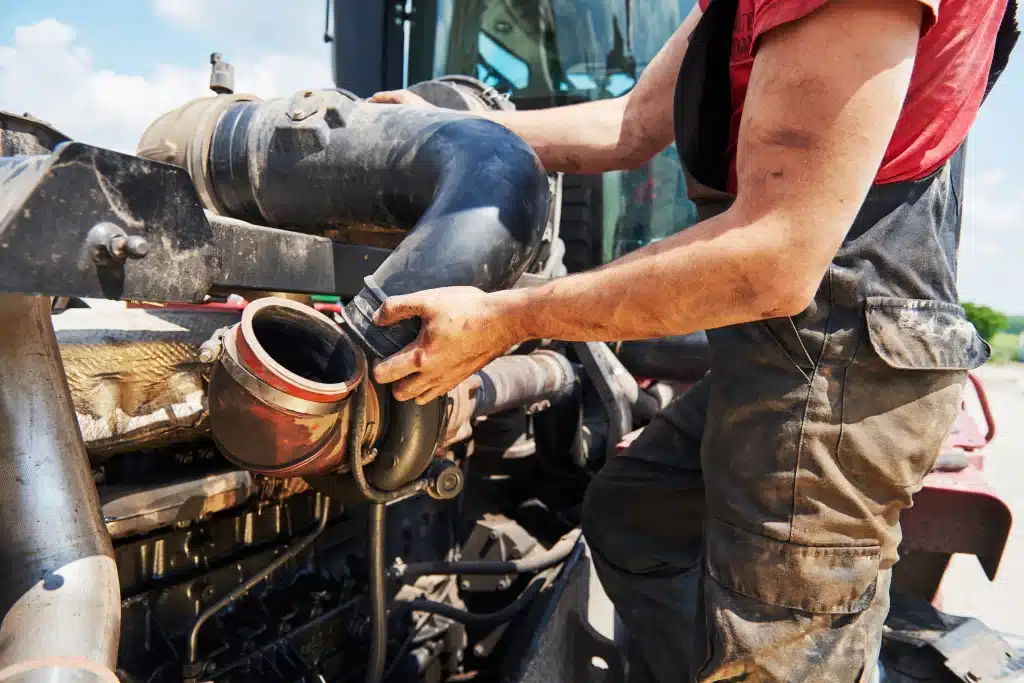
Anyone who has managed heavy equipment in a mining environment knows that the question of whether to maintain equipment proactively or repair reactively has real consequences on the company’s financial performance. The choice impacts productivity, safety, and the long-term condition of the fleet.
This blog explores the practical differences between mining equipment repair and maintenance service, what each actually costs an operation, and how getting the balance right translates into measurable outcomes for businesses running heavy equipment.
Why the Maintenance vs Repair Question Matters for Mining Equipment Repair
Mining equipment operates under harsh, challenging conditions that push components harder than those in most commercial machinery. Continuous operation, extreme loads, dust, heat, and vibration all work against service life in ways that catch underprepared operations off guard.
A maintenance programme that is underfunded or inconsistently followed generates repair bills and unplanned downtime, which carry costs well beyond the repair itself. Lost production, replacement equipment, and the pressure of managing an urgent mining equipment repair while incurring downtime losses can create a frustrating situation.
What Preventive Maintenance Involves
Preventive maintenance is the scheduled, systematic inspection and servicing of equipment before failure occurs. It is built around the manufacturer’s service intervals, operational data, and the accumulated knowledge of technicians who understand how mining machines behave under specific conditions.
A well-structured preventive maintenance programme for mining equipment typically covers:
Fluid analysis to monitor oil, coolant, and hydraulic fluid condition and detect contamination. It helps prevent metals from wearing out before they cause component damage.
• Filter replacement at correct intervals to protect engines, hydraulic systems, and fuel delivery components from particulate damage.
• Wear component inspection that covers tracks, buckets, cutting edges, and other high-wear items that degrade over time.
• Electrical and sensor checks to ensure that monitoring systems are functioning properly and providing accurate data.
• Structural inspection for cracks, fatigue, and weld integrity on frames, booms, and other load-bearing components.
• Cooling system service to maintain operating temperatures within specification under sustained heavy load.
Each of these activities costs time and money. The value of preventive maintenance comes from what it prevents rather than what it fixes.
The Real Cost of Reactive Repair on Mining Equipment
Reactive repair, where work is carried out after a failure, tends to cost more than the repair itself. The broader costs attached to an unplanned equipment failure include:
- Component damage beyond the original failure point, where a failure in one system places load on adjacent systems and accelerates their deterioration
- Emergency parts and freight, where components are needed urgently, carry significantly higher procurement costs than those ordered through a planned schedule.
- Unplanned downtime, where the lost production time during a reactive repair often exceeds what a planned service would have required.
- Labour premiums for urgent repairs carried out outside normal hours or under time pressure are higher than for scheduled maintenance work.
- Secondary damage assessment, where the full extent of damage resulting from a failure may not be immediately apparent and reveals itself progressively during repair.
In a mining environment where equipment utilisation rates directly affect production output, the operational impact of unplanned downtime compounds quickly. A machine that is out of service for two or three days due to a failure costs way more than preventive maintenance charges.
Finding the Right Balance Between Maintenance and Repair
The goal is not to eliminate repair entirely. That is not realistic for any fleet operating in demanding conditions. The goal is to shift the balance so that the majority of equipment work is planned, scheduled, and carried out at a time and pace that suits the operation rather than being forced by an unexpected breakdown.
Planned Maintenance Vs Reactive Repair: Which Benefits More
|
Factor |
Planned Maintenance |
Reactive Repair |
|
Timing |
Controlled and scheduled |
Unplanned and disruptive |
|
Component damage scope |
Limited to wear items |
Often extends beyond initial failure |
|
Parts procurement |
Planned and cost effective |
Often urgent and expensive |
|
Downtime duration |
Predictable and manageable |
Variable and often extended |
|
Labour conditions |
Normal hours and pace |
Often after hours and under pressure |
|
Long term equipment condition |
Preserved |
Progressively degraded |
How to Balance Between Planned Maintenance and Reactive Repair
Even within a well-managed maintenance programme, repair work remains a genuine and necessary part of keeping a fleet operational. Components fail unexpectedly, and operating conditions push equipment beyond what service intervals can fully account for. Damage from external events, ground conditions, and operational demands creates repair requirements that no maintenance schedule can entirely prevent.
The difference is in how that repair work is approached. Repair carried out by technicians with genuine knowledge of the equipment, using appropriate parts and correct procedures, preserves the integrity of the machine and extends the value of the maintenance work surrounding it. Repair carried out under time pressure, using incorrect components or an incomplete diagnosis, creates a different set of problems than the one it solved.
Properly done mining equipment repair is not the opposite of good maintenance. It is complementary to it. Together, they form a complete approach to keeping heavy equipment in the condition on which the operation depends.
Signs That a Maintenance Programme Needs Attention
For operations that are experiencing more reactive repair than usual, the following indicators suggest the maintenance programme may need review:
Recurring failures in the same systems or components across the fleet
• Repair bills that consistently exceed what the maintenance budget accounts for
• Equipment availability rates that fall short of operational requirements on a regular basis
• Technicians identifying damage during repairs that should have been visible during routine inspections
• Fluid analysis results showing contamination or wear that was not detected at the previous service interval.
Any of these patterns suggests the maintenance programme is not working in your favour, whether due to interval gaps, incomplete inspections, or technician knowledge gaps. It means you need to find a mining equipment maintenance service provider that can fill these gaps.
How Condition Monitoring Strengthens Maintenance and Repair Decisions
Condition monitoring uses data gathered from equipment during operation to help make maintenance and repair decisions with greater precision than fixed-interval servicing. Oil analysis, vibration monitoring, thermal imaging, and telematics data contribute to creating a picture of equipment health that allows technicians to act on what the machine is actually telling them.
In a mining environment where equipment operates continuously, and the consequences of unexpected failure are significant, condition monitoring adds a layer of visibility that fixed-interval maintenance alone cannot provide. It does not replace scheduled servicing. It makes servicing more targeted and the decisions around repair timing more informed.
Book an Appointment with Total Diesel Repairs for a Comprehensive Preventive Maintenance.
Getting the balance between maintenance and mining equipment repair right is one of the most practical steps a mining equipment operator can take to protect their fleet and production schedule.
At Total Diesel Repairs, we provide professional heavy equipment maintenance and repair services to mining and industrial operations. We bring genuine technical knowledge, use appropriate parts and procedures, and approach each machine with an understanding of its capabilities. It is reflected in the results we deliver and our client testimonials.
We serve clients who need their equipment maintained properly and repaired correctly, without shortcuts that create further problems down the line. Call us to book your maintenance and repair services today.